
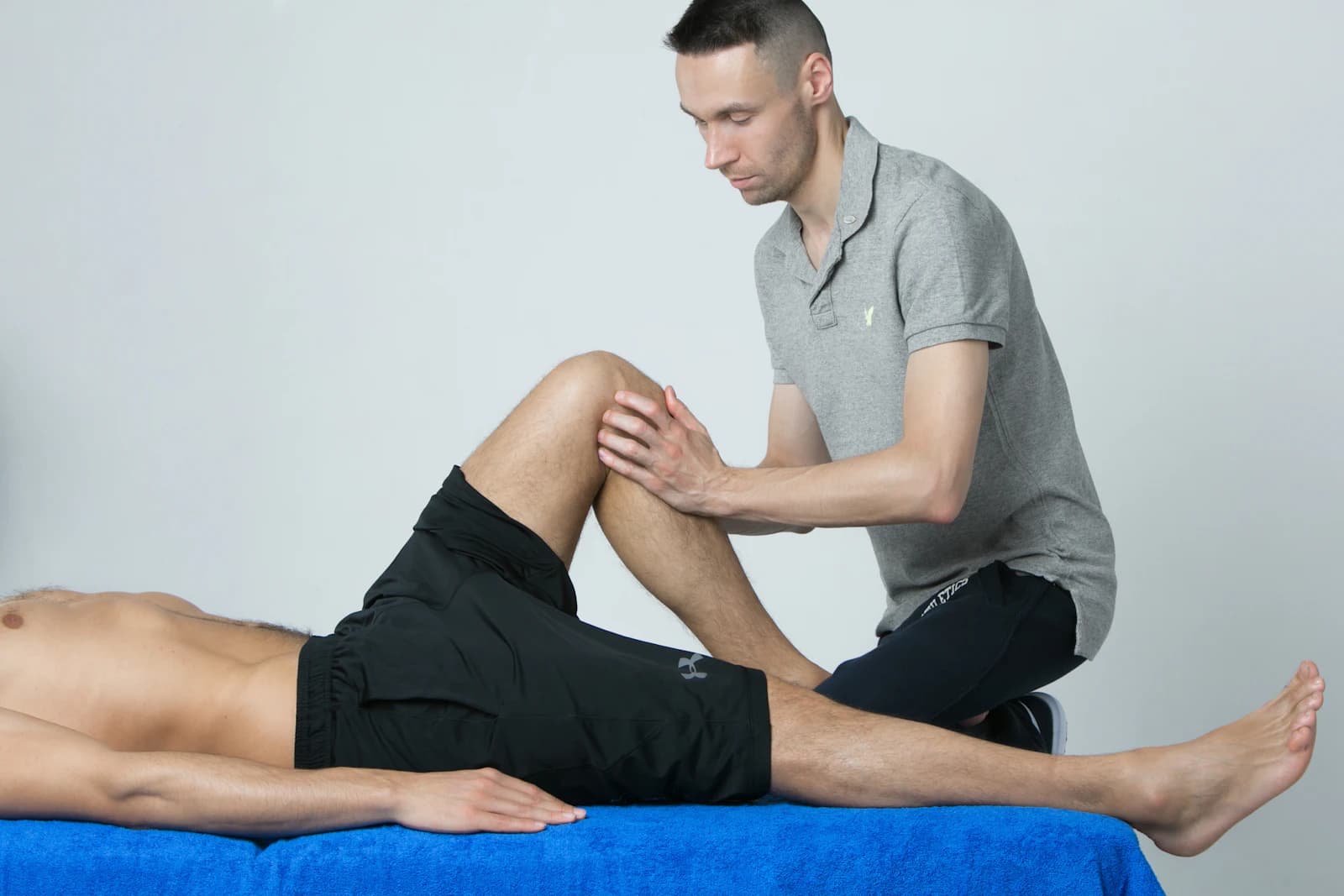
A fracture — whether in the wrist, leg, shoulder, or hip — does not end when the cast comes off or the operation is complete. In reality, for many people, that is the moment the most critical chapter begins: rehabilitation.
Muscles have wasted, the joint has lost mobility, and the body has "learnt" to avoid pain in ways that, if left uncorrected, can create new problems. A specialist physiotherapist can help you move through every phase of rehabilitation safely and effectively.
Why Rehabilitation After a Fracture Is Not Optional
Many patients believe that once the bone has "knitted" everything will be fine. However, the process is far more complex.
When a limb is immobilised for weeks, changes occur on multiple levels:
- Muscle atrophy: muscle tissue loses volume and strength relatively quickly without use.
- Joint stiffness: articular cartilage and the surrounding soft tissues "tighten" from the lack of movement.
- Proprioceptive disturbance: the nervous system loses its "sense" of the limb in space, increasing the risk of re-injury.
- Changes in posture and gait: the body compensates and loads other areas, frequently causing secondary pain.
Physiotherapy addresses all of these simultaneously — not just the site of the fracture.
Phase 1: The Acute Period (Still in a Cast or Splint)
Even whilst the fracture is immobilised, the physiotherapist can begin working — and this makes a significant difference to the recovery that follows.
At this stage, interventions typically focus on:
- Exercises for the neighbouring joints that are not immobilised, to maintain circulation and mobility.
- Isometric exercises (muscle contractions without movement) to minimise muscle atrophy.
- Training in the correct use of walking aids (crutches, frame) for safe mobility.
- Techniques to reduce swelling, such as elevation and gentle lymphatic drainage where indicated.
Starting rehabilitation early is generally associated with a faster return to everyday function.
Phase 2: After Cast Removal — Regaining Mobility
This is often the most discouraging phase for patients: the cast is off, but the limb feels weak, swollen, and stiff. This is entirely normal — and it can be addressed.
Goals of this phase:
- Progressive restoration of the joint's range of movement through guided exercises.
- Reduction of residual swelling and stiffness.
- Strengthening the muscles that support the area of the fracture.
- Training in correct reloading — how and when to bear weight through the limb safely.
In this phase, manual mobilisation or soft-tissue techniques may help improve joint function. You can read more about the manual therapy approach to pain.
Phase 3: Strengthening and Functional Rehabilitation
Once range of movement begins to return, it is time to rebuild strength — but in a structured and gradual way.
This phase includes:
- Progressive resistance exercises to restore muscle strength.
- Proprioception and balance exercises, particularly if the fracture involved a lower limb.
- Functional movements: climbing stairs, picking up objects, walking on uneven ground.
- For active patients: a gradual return to sport or demanding occupational activities.
Clinical Pilates is a particularly effective method at this stage, as it combines strengthening, stabilisation, and coordination with a low risk of overloading.
Fractures in Older Adults: Specific Challenges
Hip, wrist, and vertebral fractures are especially common in older patients — often as the result of a fall. In these cases, rehabilitation has additional goals:
- Restoring self-care and independence at home.
- Rebuilding confidence in walking — fear of falling again is a very real barrier.
- Preventing future falls through balance and strengthening exercises.
- Assessing the home environment to identify hazards.
Home physiotherapy is often the safest and most practical option for older adults after a fracture, as it avoids the need to travel and rehabilitation takes place in the patient's familiar surroundings.
Vertebral Fractures: Special Considerations
Vertebral compression fractures — which are frequently associated with osteoporosis — require particular care during rehabilitation.
The physiotherapist focuses on:
- Exercises that strengthen the paraspinal muscles without loading the fracture site.
- Training in correct body mechanics — how to get up, bend, and carry objects.
- Gentle extension exercises to counteract the kyphotic posture that often follows.
- Management of chronic back pain, which can persist even after the fracture has healed.
If you also have chronic back pain, you can find more information about managing low back pain.
When Does Rehabilitation Begin? (Earlier Than You Think)
One of the most common misconceptions is that physiotherapy starts "after enough rest". In practice, early and guided mobilisation — once approved by the orthopaedic surgeon — is generally associated with better outcomes.
Of course, the right timing depends on:
- The type and location of the fracture.
- Whether surgery was performed (e.g. fixation, joint replacement).
- The patient's age and general state of health.
- The orthopaedic surgeon's instructions.
The physiotherapist always works within the framework set by the doctor. If you would like to begin your rehabilitation, contact us for an assessment.
Home Physiotherapy After a Fracture: A Practical Option
For many patients — particularly those who find it difficult to travel after a hip, tibia, or ankle fracture — getting to a physiotherapy clinic is challenging or impossible in the early stages.
Home physiotherapy solves this problem and offers:
- Rehabilitation in familiar surroundings, which is psychologically beneficial for the patient.
- An immediate assessment of the home environment for safety (rugs, steps, bathroom).
- A tailored exercise programme suited to the patient's real-life conditions.
- Family education — it often helps for carers to know what to do and what to avoid.
In areas such as Voula, Vouliagmeni, Vari, Glyfada, and Alimos, home physiotherapy is a fully viable solution for rehabilitation after a fracture.
What to Expect from Your First Assessment
At the first appointment, the physiotherapist will carry out a full assessment that includes:
- Checking the range of movement of the affected joint.
- Evaluating muscle strength and proprioception.
- Observing gait and posture.
- A discussion about pain, fear of movement, and your everyday goals.
Based on this assessment, a personalised rehabilitation programme is designed — because no two fractures are exactly alike.
*Disclaimer: This article is for informational purposes only and does not replace an individualised assessment by a licensed physiotherapist or doctor. Before beginning any rehabilitation programme, please consult your treating physician.*