
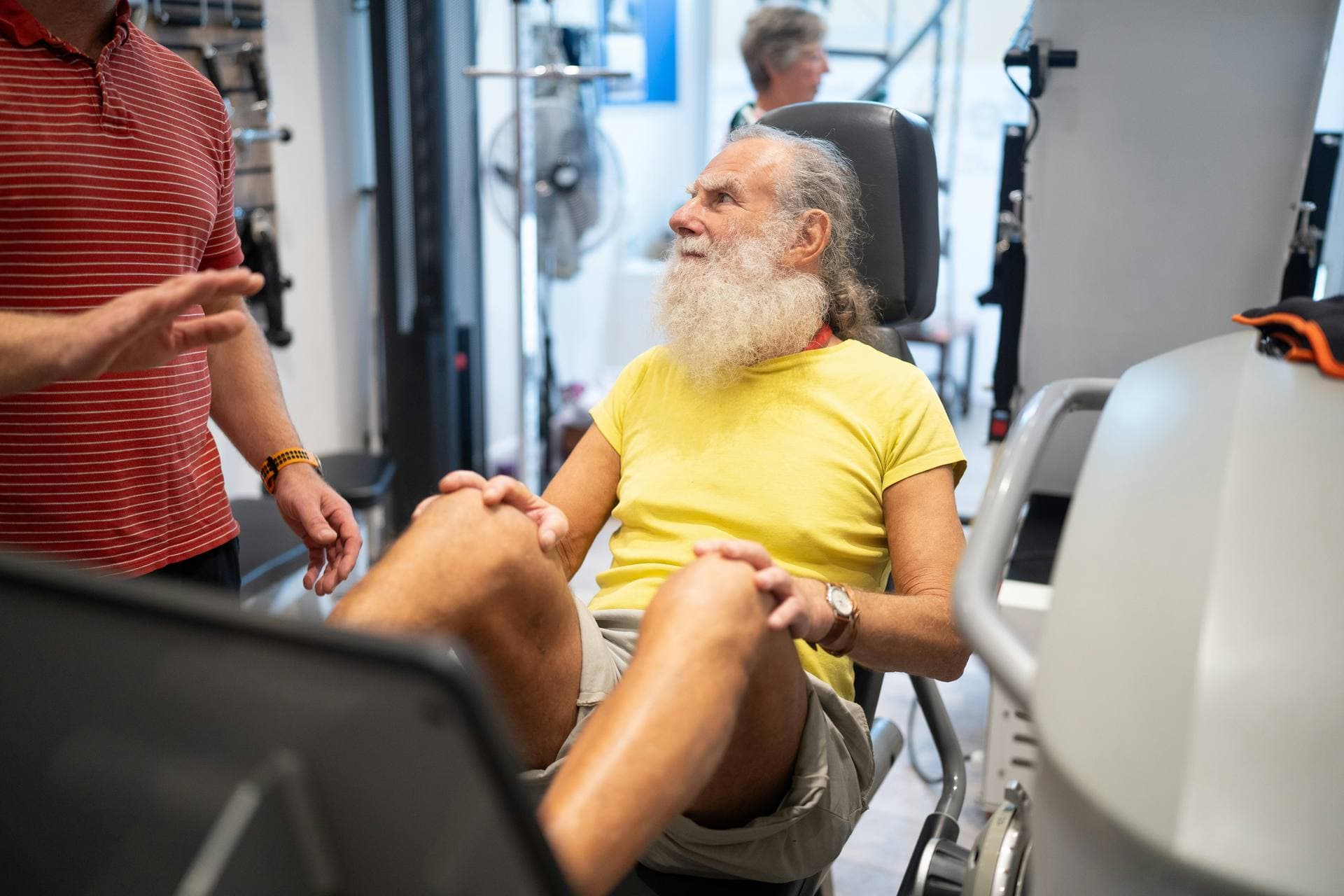
What every patient and every family should know — from a physiotherapist who works with Parkinson's every week.
A tremor in one hand. A slight stoop. The sense that one leg responds a little slower than the other. For many people, Parkinson's disease does not announce its arrival with a dramatic event — it arrives quietly, over months or years, until one day a neurologist puts a name to what the body already knew.
If you, or someone you love, have just been diagnosed, I want to tell you something important: Parkinson's is not the end of an active life — it is the beginning of a different one. And one of the most powerful weapons in the fight against it is something that is not sold in any pharmacy: targeted, consistent, specialised exercise.
What Parkinson's Really Does to Movement
Parkinson's disease is a progressive neurological condition in which certain brain cells — the ones that produce a chemical called dopamine — gradually stop working. Dopamine is essential for smooth, automatic movement. When it declines, the body's "autopilot" for walking, balance, swallowing, and even facial expression begins to stutter.
This explains the familiar signs: tremor at rest, muscle stiffness (rigidity), slowness of movement (bradykinesia), and difficulties with balance. But the less talked-about symptoms can be just as disruptive: a softer voice, smaller handwriting, reduced arm swing while walking, difficulty turning over in bed, and a face that no longer expresses emotion easily.
Medication helps — but it does not teach the brain to move. That is exactly where physiotherapy becomes essential.
The Advantage of Neuroplasticity
The human brain, even with Parkinson's, remains capable of neuroplasticity — the ability to form new connections and strengthen existing ones. Modern neuroscience shows that intense, specific, repetitive movement can genuinely change the way a brain with Parkinson's functions. It cannot restore the lost dopamine cells, but it can help the rest of the network operate more efficiently and recruit alternative pathways.
That is why the phrase "use it or lose it" is taken literally in Parkinson's rehabilitation. Every session of targeted exercise is, in a very real sense, a signal to the nervous system: this movement matters — keep it active.
What the Research Consistently Shows
Over decades of clinical study, certain findings about Parkinson's and exercise have become undeniable:
• Exercise slows functional decline. People with Parkinson's who exercise regularly lose function more slowly than those who do not.
• Intensity matters. Gentle, relaxed movement is not enough. The nervous system responds to effort — to exercises that are demanding, specific, and require attention.
• Specificity matters more than variety. Practising large, deliberate movements — big steps, wide reaches, a strong voice — directly counters the brain's tendency to "shrink" movement.
• Earlier is better than later. Starting specialised physiotherapy at the moment of diagnosis — not years afterward — builds a "reserve" of movement that pays dividends for decades.
The Core of a Parkinson's Physiotherapy Programme
A well-designed physiotherapy programme for Parkinson's is not a generic set of stretches. It is a carefully chosen combination of targeted components, all adapted to the individual's stage and symptoms.
1. Large-Movement Training
Because Parkinson's "shrinks" movement — smaller steps, reduced arm swing, a hunched posture — the antidote is to practise deliberately exaggerated movement. Patients are guided to take bigger steps, swing their arms more widely, reach further, and turn their head more. Over time, what feels "enormous" begins to look normal to an observer — and normal movement begins to return.
2. Balance and Posture Re-Training
Falls are among the most serious risks in Parkinson's — and they are preventable. A specialised physiotherapist works on:
• Stepping reactions in multiple directions
• Trunk rotation and flexibility
• Recovery from a push or unexpected shift in balance
• Safe turning — a frequent cause of falls
• Confidence on uneven surfaces and stairs
3. Gait Training
The characteristic shuffling gait of Parkinson's is recognisable — but it is also modifiable. External cues (visual, rhythmic, auditory) can literally "unlock" freezing and help a patient walk with a better rhythm. Counting steps, walking to strong-tempo music, or following lines on the floor are examples of cueing techniques a specialist can teach.
4. Strength, Flexibility and Cardiovascular Work
Strength training protects posture and independence. Flexibility work combats stiffness. Moderate to vigorous cardiovascular exercise (such as brisk walking, a stationary bike, or boxing-style workouts) has shown some of the most consistent benefits of any single intervention in Parkinson's.
5. Dual-Task Training
In Parkinson's, walking and thinking both become harder when done at the same time. Practising them together — walking while naming categories, walking while carrying a tray, walking while counting backwards — trains the brain to manage the complexity of real life.
The Stages of Parkinson's and What Physiotherapy Looks Like
| Stage | Typical Condition | Main Physiotherapy Goal |
|---|---|---|
| Early | Mild symptoms, independent | Building reserves, preventing deconditioning, education |
| Moderate | Daily tasks harder, balance affected | Maintaining function, task training, fall prevention |
| Advanced | Significant impact on mobility | Preserving autonomy, reducing caregiver burden, preventing complications |
| Final | Largely non-ambulatory | Comfort, skin integrity, respiratory function, quality of life |
Each stage requires a different programme. What helps a newly diagnosed 62-year-old maintain function is completely different from what helps a 78-year-old in a moderate stage avoid falls — and both differ from what supports comfort and dignity in advanced disease.
Why Specialisation in Neurological Physiotherapy Matters
Parkinson's responds to specific treatment — not to generic physiotherapy. A specialist in neurological rehabilitation understands:
• How to time sessions around medication (patients often move best 30–60 minutes after a dose)
• How to recognise and respond to freezing of gait
• How to safely increase intensity without causing fatigue
• How to teach internal and external cueing strategies that work in real life
• How to coach family members and carers so that progress continues between sessions
Generic exercise is not wrong — it simply isn't enough. The difference between a generalised programme and a targeted, Parkinson's-specific one is the difference between walking and walking better, between hoping for stability and building it.
What Family Members Can Do
If you are reading this article as a family member, your role is genuinely important — and genuinely underrated. You are often the first to notice small changes, the first to encourage activity on difficult days, and the person whose voice determines whether the patient heads toward exercise or toward the couch.
A few principles that consistently help:
• Encourage movement without nagging. Invitations beat commands. "Would you like to take a walk together?" is more effective than "you need to exercise."
• Use cues, not orders. A rhythmic beat, a line on the floor, or a gentle count can unlock movement when words of pressure cannot.
• Protect their sense of self-determination. Let the patient decide wherever possible. Small choices preserve dignity.
• Notice changes early. New freezing, new falls, new softness in the voice — report them to the physiotherapist. Information from home is diagnostic gold.
• Take care of yourself. Parkinson's is a long journey. An exhausted carer helps no one.
When to Start Physiotherapy — and With Whom
The answer to when is simple: as soon as possible after diagnosis. Not when symptoms are severe. Not when medication "stops working." Not when the falls begin. The earliest sessions do the greatest preventive work.
The answer to with whom is more specific: look for a physiotherapist with focused experience in neurological rehabilitation and comfort working with movement disorders. Ideally, they should be willing to collaborate with your neurologist, adapt the programme as the condition evolves, and support both clinic-based and at-home practice.
Book an Assessment Appointment
At PhysioDanali, we offer specialised, exercise-based rehabilitation for patients with Parkinson's disease in Voula, Glyfada and Vouliagmeni. Every programme is designed around the individual — their stage, their goals, their life — and evolves alongside them.
If you or someone in your family has been diagnosed with Parkinson's, don't wait for the symptoms to worsen. The first months of targeted physiotherapy set the tone for years of better function.
Call PhysioDanali today to book an assessment appointment.
This article is for information only and is not a substitute for medical advice. Parkinson's disease is diagnosed and medically managed by a neurologist; physiotherapy complements — and does not replace — medical care.